

Affiliate Disclosure: This post contains affiliate links. If you click a link and make a purchase, we may earn a small commission at no extra cost to you. We only recommend products we believe can genuinely help your dog sleep better.
If you have ever walked past your dog at 2 a.m. and seen them curled up on a cold hardwood floor instead of the expensive bed you bought them, you already know the struggle. Choosing a dog bed sounds simple until you actually start shopping. Suddenly you are facing dozens of shapes, sizes, fillings, and price tags, and none of the packaging tells you which one is right for your specific dog.
The truth is, there is no single “best dog bed.” The best bed for a 10-week-old Labrador puppy is completely different from the best bed for a 12-year-old Dachshund with joint pain, which is again different from what a Great Dane or a Siberian Husky needs. Breed, size, age, sleeping style, and even your local climate all play a role.
This guide breaks everything down in plain language so you can pick a bed that actually gets used — not one that ends up as an expensive dust collector in the corner while your dog sleeps on the couch.
Table of Contents
- Why the Right Dog Bed Actually Matters
- Types of Dog Beds Explained
- Choosing a Bed by Dog Size
- Choosing a Bed by Life Stage (Puppy, Adult, Senior)
- Choosing a Bed for Specific Breeds
- Special Needs: Arthritis, Anxiety, Chewers, and Climate
- Materials, Fillings, and Durability
- Cleaning and Maintenance Tips
- A Simple Checklist Before You Buy
- Frequently Asked Questions
- Final Thoughts
- Why the Right Dog Bed Actually Matters
Dogs spend a huge portion of their day sleeping. Puppies can sleep 18–20 hours a day, adult dogs average 12–14 hours, and senior dogs often sleep even more as their energy levels drop. That means the surface your dog rests on has a direct impact on their joints, muscles, skin, and overall comfort.
A poorly chosen bed can lead to:
- Pressure sores, especially in large and senior dogs
- Joint stiffness or worsened arthritis symptoms
- Overheating in warm climates
- Anxiety, if the dog doesn’t feel secure or enclosed
- Destroyed stuffing and fabric, if the bed can’t handle a determined chewer
On the other hand, the right bed can genuinely improve mobility in older dogs, help puppies settle into a routine faster, and give anxious dogs a sense of safety. This is one of those purchases where spending a little time researching pays off for years.
If you want a solid all-around starting point, something like the Orthopedic Memory Foam Dog Bed – View on Amazon is a good baseline option that works across many breeds and ages, which we will reference again later in this guide.
- Types of Dog Beds Explained
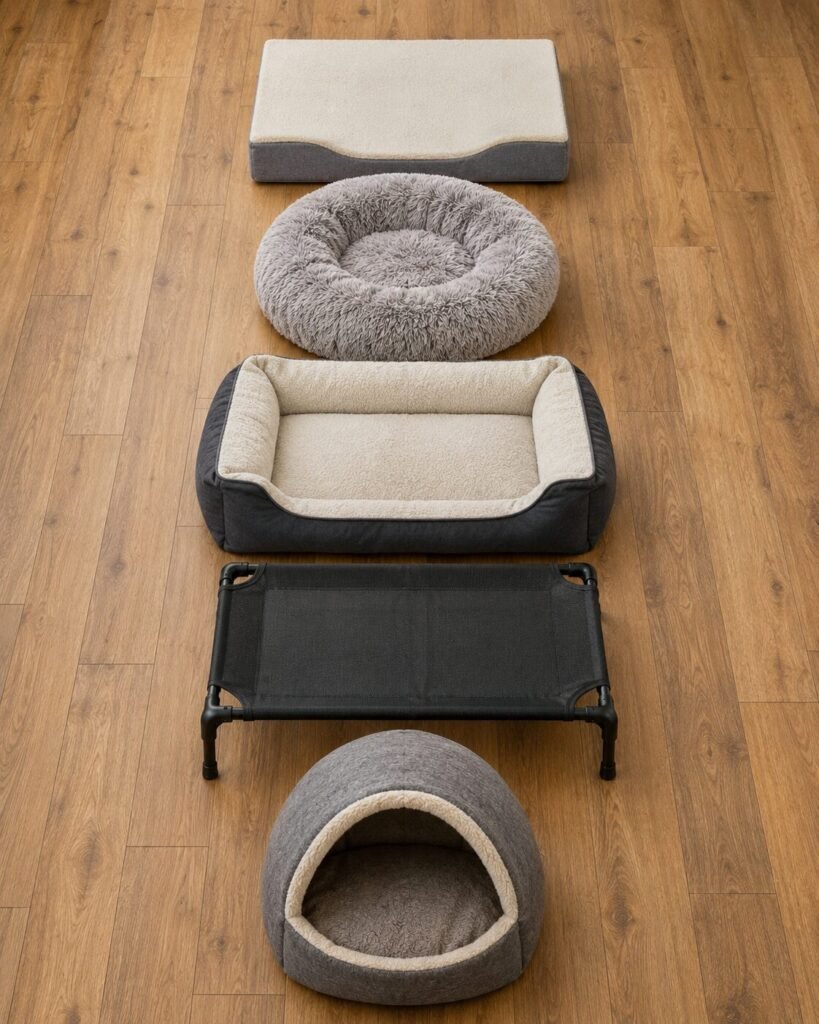
Before matching a bed to your dog, it helps to understand the main categories available on the market today.
Orthopedic Memory Foam Beds These use high-density memory foam that contours to the body and evenly distributes weight. They are ideal for large breeds, senior dogs, and any dog with joint issues. A trusted pick here is the Premium Orthopedic Foam Bed for Large Dogs – Check Price.
Bolster Beds These have raised edges (bolsters) on some or all sides, giving dogs something to rest their head on and a sense of security. Great for breeds that like to curl up, such as Corgis or Beagles.
Donut / Cuddler Beds Round, plush beds with high rims all around. Dogs that like to burrow or curl into a tight ball — like Pomeranians, Shih Tzus, and small terriers — tend to love these. A popular option is the Calming Donut Cuddler Bed – See Options.
Cave or Hooded Beds Enclosed, tent-like beds that give nervous or cold-sensitive dogs a den-like hiding spot. Good for small breeds and anxious dogs.
Elevated / Cot Beds Raised off the ground on a metal or PVC frame with breathable fabric stretched across. These keep dogs cool and are excellent for hot climates, outdoor use, or dogs with skin allergies. Check out the Elevated Cooling Cot Bed – View Deal.
Cooling Gel Beds Infused with cooling gel layers, these are designed for warm-weather regions or thick-coated breeds like Huskies and Malamutes that overheat easily indoors.
Heated Beds Beds with a low-wattage internal heating element, useful for senior dogs, short-haired breeds, or homes in cold climates.
Waterproof / Chew-Resistant Beds Built with reinforced fabric and waterproof liners, aimed at puppies still being house-trained or heavy chewers. A solid choice is the Waterproof Chew-Resistant Dog Bed – Check Availability.
- Choosing a Bed by Dog Size
Small Breeds (under 20 lbs) — Chihuahuas, Pomeranians, Yorkies, Dachshunds Small dogs lose heat quickly because of their size, so they often prefer enclosed or high-sided beds that trap warmth. Donut beds and cave beds work particularly well. Look for something soft but supportive, since even small dogs can develop joint issues over time.

Medium Breeds (20–50 lbs) — Beagles, Border Collies, Bulldogs, Cocker Spaniels Medium dogs benefit from bolster beds or moderately firm orthopedic beds. They are active enough during the day that a supportive, washable bed makes a big difference in recovery and rest quality.
Large Breeds (50–90 lbs) — Labradors, Golden Retrievers, German Shepherds Large breeds are prone to hip dysplasia and joint wear, so orthopedic memory foam is almost always the better investment. The XL Orthopedic Bed for Large Breeds – Check Price is designed specifically with this weight range in mind.
Giant Breeds (90+ lbs) — Great Danes, Mastiffs, Saint Bernards Giant breeds need extra-thick foam (at least 4 inches) and a reinforced base that won’t flatten under heavy weight. Elevated cot beds are also popular here since they reduce pressure points and improve airflow for dogs prone to overheating.
- Choosing a Bed by Life Stage
Puppies (0–12 months) Puppies chew, have accidents, and grow fast. Prioritize:
- Washable, waterproof covers
- Chew-resistant materials
- A slightly smaller size that feels cozy (oversized beds can make puppies feel less secure)
- Affordability, since they will likely outgrow it or damage it
The Waterproof Chew-Resistant Dog Bed – Check Availability mentioned earlier is a great starting point for this stage.
Adult Dogs (1–7 years) This is where you can invest in a higher-quality bed that matches their breed size and sleeping style, since most adult dogs will use one bed style consistently for years. Consider your dog’s favorite sleeping position — side sleepers benefit from flat orthopedic beds, while dogs that curl up prefer bolster or donut styles.
Senior Dogs (7+ years, earlier for large breeds) Senior dogs need the most support. Look for:
- Orthopedic memory foam at least 3–4 inches thick
- Low entry height, so dogs with weak joints can get in and out easily
- Machine-washable covers, since senior dogs may have more accidents
- Non-slip bottoms to prevent sliding on hard floors
A strong option here is the Senior Dog Orthopedic Support Bed – View on Amazon, which is specifically designed with joint support in mind.
- Choosing a Bed for Specific Breeds
Labrador Retriever / Golden Retriever — Prone to hip and elbow issues; go with thick orthopedic foam.
German Shepherd — Active, heavier build; a large orthopedic bed with a durable, tear-resistant cover works best.
French Bulldog / Pug — Short-nosed breeds run warm easily; a cooling gel bed or breathable elevated cot helps prevent overheating.
Siberian Husky / Alaskan Malamute — Thick double coats mean these dogs often overheat indoors; elevated or cooling beds are ideal, especially in warmer regions.
Dachshund / Corgi — Long spines benefit from bolster beds that support the back without forcing an awkward curl.
Chihuahua / Pomeranian / Maltese — Small, cold-sensitive breeds do best in donut or cave-style beds that hold in body heat.
Greyhound / Whippet — Very low body fat means these breeds need extra-thick padding to avoid pressure sores on bony joints.
Great Dane / Mastiff — Giant frames need reinforced, extra-large orthopedic beds or elevated cots rated for higher weight capacities.
- Special Needs: Arthritis, Anxiety, Chewers, and Climate
Dogs with Arthritis or Joint Pain Memory foam that is at least 3 inches thick is the minimum recommendation. Avoid beds filled only with loose polyester fiber, as it flattens quickly and stops providing support within a few months.
Anxious or Nervous Dogs Look for high-sided, enclosed, or hooded designs. Some anxiety-focused beds use a “self-soothing” faux fur texture that mimics the feeling of nuzzling into a mother’s fur, which can genuinely help nervous dogs settle faster.
Heavy Chewers Choose reinforced, ballistic-nylon covers with reinforced stitching. Avoid beds with exposed zippers your dog could pull open. Chew-resistant beds cost more upfront but save money in the long run since regular beds may need replacing every few months.
Hot Climates Elevated cots, cooling gel pads, and breathable mesh materials help prevent overheating, especially for thick-coated or brachycephalic (short-nosed) breeds.
Cold Climates Heated beds or high-sided donut beds that trap body heat work well, particularly for short-haired breeds like Boxers or Greyhounds who feel the cold more.
- Materials, Fillings, and Durability
Memory Foam — Best support and pressure relief; ideal for joint issues, but check the density (higher density = longer-lasting support).
Polyester Fiberfill — Soft and affordable but compresses over time; better for smaller or lighter dogs.
Cedar-Infused Filling — Naturally repels fleas and odors; a nice bonus feature for dogs that spend time outdoors.
Cotton or Cotton-Blend Covers — Breathable and gentle on skin, good for dogs with sensitivities.
Nylon or Canvas Covers — More durable, water-resistant, and better for chewers or outdoor use.
Removable, Machine-Washable Covers — Genuinely one of the most important features to look for regardless of your dog’s breed or age, since it makes hygiene maintenance far easier.
- Cleaning and Maintenance Tips
- A Simple Checklist Before You Buy
- Does the size match your dog’s actual measurements (not just their breed’s average)?
- Is the filling appropriate for their age and joint health?
- Is the cover removable and machine washable?
- Does it suit your climate (cooling vs. heated)?
- Can it handle your dog’s specific behavior (chewing, digging, burrowing)?
- Does it have a non-slip base if your floors are hardwood or tile?
- Is it within a budget that makes sense for how long you expect to use it?
If you are looking for a well-rounded option that checks most of these boxes, the Best-Selling All-Purpose Dog Bed – Check Current Price and the Luxury Plush Bolster Bed – View on Amazon are both popular choices worth comparing.
- Frequently Asked Questions
How do I know what size dog bed to buy? Measure your dog from nose to tail while lying down, then add 6–12 inches to that length for comfortable stretching room. Always check the manufacturer’s weight capacity as well, not just the length and width.
How often should I replace my dog’s bed? Most beds last 1–3 years depending on quality and the dog’s size. Orthopedic foam beds tend to last longer if kept clean and used with a protective liner.
Do puppies need a special bed? Not necessarily a “special” bed, but a smaller, washable, and chew-resistant one is strongly recommended until house-training is complete and destructive chewing habits fade.
Can one bed work for multiple dogs? Yes, but size up significantly and choose a rectangular, flat-style bed rather than a donut or cave bed, since multiple dogs need open space to spread out comfortably.
Are heated beds safe? Most modern heated dog beds use low-voltage, chew-resistant cords and auto-shutoff features, making them safe for supervised use. Always check the product’s safety certifications before buying.
What is the best dog bed for hip dysplasia? Thick, high-density orthopedic memory foam (at least 4 inches) is generally recommended, since it reduces pressure on the hips and supports natural spinal alignment.
- Final Thoughts
There is no universal “best” dog bed — only the best bed for your specific dog, based on their breed, size, age, and personality. A tiny, anxious Pomeranian puppy has completely different needs from a senior Great Dane with joint pain, and shopping with that in mind will save you money and prevent a lot of unused, unwanted beds piling up in your closet.
Start by identifying your dog’s size category and life stage, then narrow down based on any special needs like chewing habits, anxiety, or climate. From there, the products linked throughout this guide are a solid starting point for comparing real options rather than guessing blindly.
Whatever you choose, the goal is simple: give your dog a spot that is truly their own, one they will actually want to sleep in every single night.
This article is intended for general informational purposes and does not replace advice from a licensed veterinarian, especially regarding medical conditions such as arthritis, hip dysplasia, or skin sensitivities. Always consult your vet for guidance specific to your dog’s health needs.Affiliate Disclosure: This post contains affiliate links. If you click a link and make a purchase, we may earn a small commission at no extra cost to you. We only recommend products we believe can genuinely help your dog sleep better.
If you have ever walked past your dog at 2 a.m. and seen them curled up on a cold hardwood floor instead of the expensive bed you bought them, you already know the struggle. Choosing a dog bed sounds simple until you actually start shopping. Suddenly you are facing dozens of shapes, sizes, fillings, and price tags, and none of the packaging tells you which one is right for your specific dog.
The truth is, there is no single “best dog bed.” The best bed for a 10-week-old Labrador puppy is completely different from the best bed for a 12-year-old Dachshund with joint pain, which is again different from what a Great Dane or a Siberian Husky needs. Breed, size, age, sleeping style, and even your local climate all play a role.
This guide breaks everything down in plain language so you can pick a bed that actually gets used — not one that ends up as an expensive dust collector in the corner while your dog sleeps on the couch.
Table of Contents
- Why the Right Dog Bed Actually Matters
- Types of Dog Beds Explained
- Choosing a Bed by Dog Size
- Choosing a Bed by Life Stage (Puppy, Adult, Senior)
- Choosing a Bed for Specific Breeds
- Special Needs: Arthritis, Anxiety, Chewers, and Climate
- Materials, Fillings, and Durability
- Cleaning and Maintenance Tips
- A Simple Checklist Before You Buy
- Frequently Asked Questions
- Final Thoughts
- Why the Right Dog Bed Actually Matters
Dogs spend a huge portion of their day sleeping. Puppies can sleep 18–20 hours a day, adult dogs average 12–14 hours, and senior dogs often sleep even more as their energy levels drop. That means the surface your dog rests on has a direct impact on their joints, muscles, skin, and overall comfort.
A poorly chosen bed can lead to:
- Pressure sores, especially in large and senior dogs
- Joint stiffness or worsened arthritis symptoms
- Overheating in warm climates
- Anxiety, if the dog doesn’t feel secure or enclosed
- Destroyed stuffing and fabric, if the bed can’t handle a determined chewer
On the other hand, the right bed can genuinely improve mobility in older dogs, help puppies settle into a routine faster, and give anxious dogs a sense of safety. This is one of those purchases where spending a little time researching pays off for years.
If you want a solid all-around starting point, something like the Orthopedic Memory Foam Dog Bed – View on Amazon is a good baseline option that works across many breeds and ages, which we will reference again later in this guide.
- Types of Dog Beds Explained
Before matching a bed to your dog, it helps to understand the main categories available on the market today.
Orthopedic Memory Foam Beds These use high-density memory foam that contours to the body and evenly distributes weight. They are ideal for large breeds, senior dogs, and any dog with joint issues. A trusted pick here is the Premium Orthopedic Foam Bed for Large Dogs – Check Price.
Bolster Beds These have raised edges (bolsters) on some or all sides, giving dogs something to rest their head on and a sense of security. Great for breeds that like to curl up, such as Corgis or Beagles.
Donut / Cuddler Beds Round, plush beds with high rims all around. Dogs that like to burrow or curl into a tight ball — like Pomeranians, Shih Tzus, and small terriers — tend to love these. A popular option is the Calming Donut Cuddler Bed – See Options.
Cave or Hooded Beds Enclosed, tent-like beds that give nervous or cold-sensitive dogs a den-like hiding spot. Good for small breeds and anxious dogs.
Elevated / Cot Beds Raised off the ground on a metal or PVC frame with breathable fabric stretched across. These keep dogs cool and are excellent for hot climates, outdoor use, or dogs with skin allergies. Check out the Elevated Cooling Cot Bed – View Deal.
Cooling Gel Beds Infused with cooling gel layers, these are designed for warm-weather regions or thick-coated breeds like Huskies and Malamutes that overheat easily indoors.
Heated Beds Beds with a low-wattage internal heating element, useful for senior dogs, short-haired breeds, or homes in cold climates.
Waterproof / Chew-Resistant Beds Built with reinforced fabric and waterproof liners, aimed at puppies still being house-trained or heavy chewers. A solid choice is the Waterproof Chew-Resistant Dog Bed – Check Availability.
- Choosing a Bed by Dog Size
Small Breeds (under 20 lbs) — Chihuahuas, Pomeranians, Yorkies, Dachshunds Small dogs lose heat quickly because of their size, so they often prefer enclosed or high-sided beds that trap warmth. Donut beds and cave beds work particularly well. Look for something soft but supportive, since even small dogs can develop joint issues over time.
Medium Breeds (20–50 lbs) — Beagles, Border Collies, Bulldogs, Cocker Spaniels Medium dogs benefit from bolster beds or moderately firm orthopedic beds. They are active enough during the day that a supportive, washable bed makes a big difference in recovery and rest quality.
Large Breeds (50–90 lbs) — Labradors, Golden Retrievers, German Shepherds Large breeds are prone to hip dysplasia and joint wear, so orthopedic memory foam is almost always the better investment. The XL Orthopedic Bed for Large Breeds – Check Price is designed specifically with this weight range in mind.
Giant Breeds (90+ lbs) — Great Danes, Mastiffs, Saint Bernards Giant breeds need extra-thick foam (at least 4 inches) and a reinforced base that won’t flatten under heavy weight. Elevated cot beds are also popular here since they reduce pressure points and improve airflow for dogs prone to overheating.
- Choosing a Bed by Life Stage
Puppies (0–12 months) Puppies chew, have accidents, and grow fast. Prioritize:
- Washable, waterproof covers
- Chew-resistant materials
- A slightly smaller size that feels cozy (oversized beds can make puppies feel less secure)
- Affordability, since they will likely outgrow it or damage it
The Waterproof Chew-Resistant Dog Bed – Check Availability mentioned earlier is a great starting point for this stage.
Adult Dogs (1–7 years) This is where you can invest in a higher-quality bed that matches their breed size and sleeping style, since most adult dogs will use one bed style consistently for years. Consider your dog’s favorite sleeping position — side sleepers benefit from flat orthopedic beds, while dogs that curl up prefer bolster or donut styles.
Senior Dogs (7+ years, earlier for large breeds) Senior dogs need the most support. Look for:
- Orthopedic memory foam at least 3–4 inches thick
- Low entry height, so dogs with weak joints can get in and out easily
- Machine-washable covers, since senior dogs may have more accidents
- Non-slip bottoms to prevent sliding on hard floors
A strong option here is the Senior Dog Orthopedic Support Bed – View on Amazon, which is specifically designed with joint support in mind.
- Choosing a Bed for Specific Breeds
Labrador Retriever / Golden Retriever — Prone to hip and elbow issues; go with thick orthopedic foam.
German Shepherd — Active, heavier build; a large orthopedic bed with a durable, tear-resistant cover works best.
French Bulldog / Pug — Short-nosed breeds run warm easily; a cooling gel bed or breathable elevated cot helps prevent overheating.
Siberian Husky / Alaskan Malamute — Thick double coats mean these dogs often overheat indoors; elevated or cooling beds are ideal, especially in warmer regions.
Dachshund / Corgi — Long spines benefit from bolster beds that support the back without forcing an awkward curl.
Chihuahua / Pomeranian / Maltese — Small, cold-sensitive breeds do best in donut or cave-style beds that hold in body heat.
Greyhound / Whippet — Very low body fat means these breeds need extra-thick padding to avoid pressure sores on bony joints.
Great Dane / Mastiff — Giant frames need reinforced, extra-large orthopedic beds or elevated cots rated for higher weight capacities.
- Special Needs: Arthritis, Anxiety, Chewers, and Climate
Dogs with Arthritis or Joint Pain Memory foam that is at least 3 inches thick is the minimum recommendation. Avoid beds filled only with loose polyester fiber, as it flattens quickly and stops providing support within a few months.
Anxious or Nervous Dogs Look for high-sided, enclosed, or hooded designs. Some anxiety-focused beds use a “self-soothing” faux fur texture that mimics the feeling of nuzzling into a mother’s fur, which can genuinely help nervous dogs settle faster.
Heavy Chewers Choose reinforced, ballistic-nylon covers with reinforced stitching. Avoid beds with exposed zippers your dog could pull open. Chew-resistant beds cost more upfront but save money in the long run since regular beds may need replacing every few months.
Hot Climates Elevated cots, cooling gel pads, and breathable mesh materials help prevent overheating, especially for thick-coated or brachycephalic (short-nosed) breeds.
Cold Climates Heated beds or high-sided donut beds that trap body heat work well, particularly for short-haired breeds like Boxers or Greyhounds who feel the cold more.
- Materials, Fillings, and Durability
Memory Foam — Best support and pressure relief; ideal for joint issues, but check the density (higher density = longer-lasting support).
Polyester Fiberfill — Soft and affordable but compresses over time; better for smaller or lighter dogs.
Cedar-Infused Filling — Naturally repels fleas and odors; a nice bonus feature for dogs that spend time outdoors.
Cotton or Cotton-Blend Covers — Breathable and gentle on skin, good for dogs with sensitivities.
Nylon or Canvas Covers — More durable, water-resistant, and better for chewers or outdoor use.
Removable, Machine-Washable Covers — Genuinely one of the most important features to look for regardless of your dog’s breed or age, since it makes hygiene maintenance far easier.
- Cleaning and Maintenance Tips
- A Simple Checklist Before You Buy
Before adding anything to your cart, run through this quick checklist:
- Does the size match your dog’s actual measurements (not just their breed’s average)?
- Is the filling appropriate for their age and joint health?
- Is the cover removable and machine washable?
- Does it suit your climate (cooling vs. heated)?
- Can it handle your dog’s specific behavior (chewing, digging, burrowing)?
- Does it have a non-slip base if your floors are hardwood or tile?
- Is it within a budget that makes sense for how long you expect to use it?
If you are looking for a well-rounded option that checks most of these boxes, the Best-Selling All-Purpose Dog Bed – Check Current Price and the Luxury Plush Bolster Bed – View on Amazon are both popular choices worth comparing.
- Frequently Asked Questions
How do I know what size dog bed to buy? Measure your dog from nose to tail while lying down, then add 6–12 inches to that length for comfortable stretching room. Always check the manufacturer’s weight capacity as well, not just the length and width.
How often should I replace my dog’s bed? Most beds last 1–3 years depending on quality and the dog’s size. Orthopedic foam beds tend to last longer if kept clean and used with a protective liner.
Do puppies need a special bed? Not necessarily a “special” bed, but a smaller, washable, and chew-resistant one is strongly recommended until house-training is complete and destructive chewing habits fade.
Can one bed work for multiple dogs? Yes, but size up significantly and choose a rectangular, flat-style bed rather than a donut or cave bed, since multiple dogs need open space to spread out comfortably.
Are heated beds safe? Most modern heated dog beds use low-voltage, chew-resistant cords and auto-shutoff features, making them safe for supervised use. Always check the product’s safety certifications before buying.
What is the best dog bed for hip dysplasia? Thick, high-density orthopedic memory foam (at least 4 inches) is generally recommended, since it reduces pressure on the hips and supports natural spinal alignment.
- Final Thoughts
There is no universal “best” dog bed — only the best bed for your specific dog, based on their breed, size, age, and personality. A tiny, anxious Pomeranian puppy has completely different needs from a senior Great Dane with joint pain, and shopping with that in mind will save you money and prevent a lot of unused, unwanted beds piling up in your closet.
Start by identifying your dog’s size category and life stage, then narrow down based on any special needs like chewing habits, anxiety, or climate. From there, the products linked throughout this guide are a solid starting point for comparing real options rather than guessing blindly.
Whatever you choose, the goal is simple: give your dog a spot that is truly their own, one they will actually want to sleep in every single night.
This article is intended for general informational purposes and does not replace advice from a licensed veterinarian, especially regarding medical conditions such as arthritis, hip dysplasia, or skin sensitivities. Always consult your vet for guidance specific to your dog’s health needs.